
Selene's Calendar Continued...

Day of Helios Hour of Venus
11/25/2025 8:27 pst
Portland Oregon
Helios 3’39” Sagittarius
Luna 3’11” Aquarius
Asc 15’35” Sagittarius
The Natural Calendar Part II (Find the PDF in the previous post)
I sit with a desire to explode into understanding
Wishing that I could look you in the eyes and you would see what I see
Not that I wish to convert you
Just so that my thoughts, my feelings, and my intentions
Could be understood at once
So that you could discern them for yourself
Instead of this clumsy attempt to spread them out
Into the fragments of words all over the page
Hoping that the the order that I place them in
Conveys not only the point in which the period is placed
However, that it contains the journey, feeling, and desire
That took me to get there.
I am, in totality, resisting from only writing in the fragmented form shown above. Because, it better represents the way that I think, talk, and feel when I’m writing or speaking. I failed every “english” class I ever took and so I struggle with punctuation, spelling, and grammar. So I start with this as an apology to you dear reader. However, a part of me is giddy in the moment that I’m writing, since the inclusion of so called “Artificial Intelligence” is going to be used to edit and “perfect” anything it touches to some sort of idyllic standard. My imperfections will be glaringly human.
Function
The main point of today’s post is to talk more about the functionality and purpose of the “Natural Calendar”. The bones of its structure and the “choices” I’ve made, that are based on my current understanding of how to construct a calendar. We’ll start at the visual construction of the page from the top down and then we’ll explore further beyond this first visual attempt.

Solar Season
The First Bar or division of time that is listed is the “Solar Season”. For those familiar with “Western Astrology” you will notice the name to be that with the portion of the “Tropical Zodiac” that the Sun is currently in and this is where our first page of the Natural Calendar begins.
Why the Sun and Tropical Zodiac?
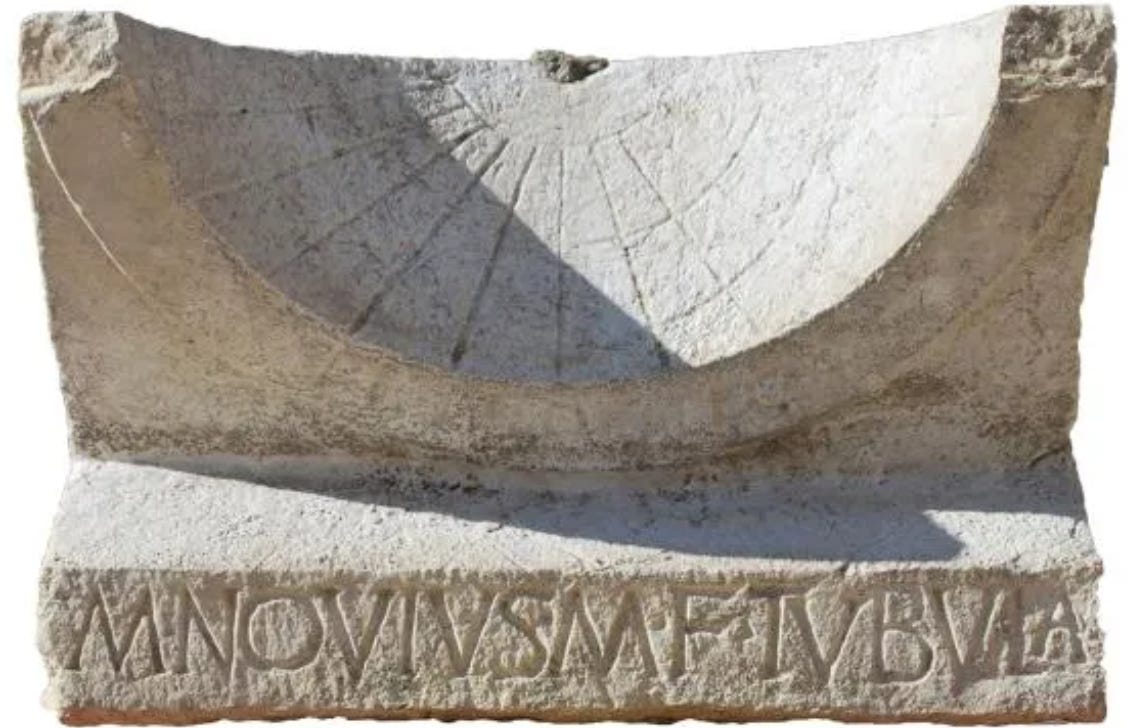
The “Tropical Zodiac” is directly connected to the movement of the Sun and its relationship to the seasons of Gaia. Text will be used in this color to act as intertextual foot notes. This will act as a sidebar to the reader and will either show links to texts or explain a choice in a concept or word. I’m going to be using Gaia instead of “Earth” to purposely anthropomorphize and deify the planet that we live on. The “Tropical Zodiac” is evenly divided according to the Equinox and Solstice points where there is extreme unequal amounts of light and also perfectly equal amounts of light in the day. This relationship can easiest be experienced in the map of a sundial. Regardless of how humanity has attempted to partition the “days of the year” into a map of time. This relationship remains steady.
Though the names are an ancient reference to “constellational images” it is the easiest and most recognizable language for these portions of the year. So, according to the Natural Calendar we are in the last moments of the waning light of the Sun in the Northern Hemisphere and the last of the waxing light of the Sun in the Southern Hemisphere. It is curious to also know that these differences between the north and south does not change our “Positional” location to the relationship to the Sun. Both Northern and Southern Hemisphere remain at the same position of Gaia to Helios. Including the stars that are hidden by the Sun and those that are not. The length of day light may be different. However, Gaia’s Spine Thank you astrologer Gemini Brett for introducing me to this term for “The Earths” axis. Remains in the same position to the light from the sun and the stars. Though, our experiences of this light are felt in the seasonal differences. The Northern Hemisphere grows colder as it yearns for the warmth of Helios I haven’t yet said that Helios will be my “favorite” name for our star known more commonly as the Sun. Helios is the greek Titan of the Sun. I will also be using Luna and Selene as my words for the celestial satellite more commonly known as “the moon”. I’m doing this on purpose to pull away the objectification of these sphere’s because the process of “objectification” takes away from their own agency, perspective, and experience. The Southern Hemisphere experiences the intensity and heat from the longest days of summer.
Furthermore, I will be using the “Hellenistic” perspective of the energy of these “Tropical Zodiac” seasons. In this regard we’ll be saying things like “Jupiter is our custodian of this time…” and things of that regard. I’m going to try to stay away from using the words “Ruler” or “Lord” since they notate periods of history and ideas of power structures that I’m trying to shift away from. Instead I’ll be using words like “Custodian”, “Teacher”, and “Guide” as much as possible.
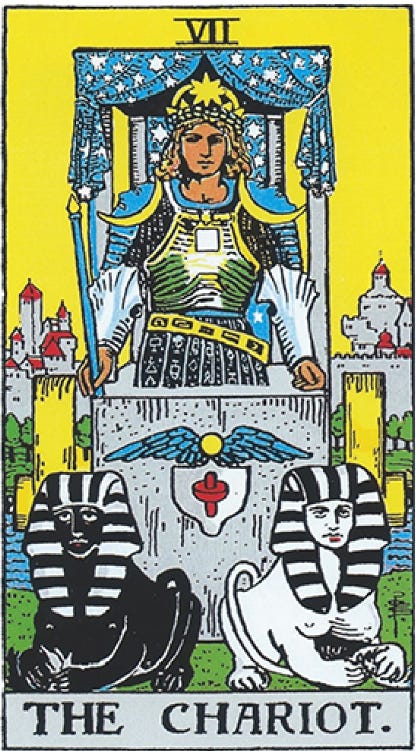

Lunar Month “Month of the Charioteer”
This is how we will be including and separating the Lunar Month from the Solar Season. The dance between Helios and Selene is not equal from year to year. There is a 19 year cycle that shifts how and when the “New” and “Fullness” of the Lunar cycle is observed. In fact one of the reasons I’m inspired to begin this journey when I am is because we are at the beginning of a “Metonic” or 19 year cycle as I’m writing this. In Virgo Season we experienced the 13th “New Moon” as a solar eclipse. This 13th moon happens every 3 years and 3 months inside of the 19 year cycle. Though it is not always experienced inside the same solar season and I have not explored weather it always includes an eclipse. I will get back to you, dear reader, if I find that to be a co incidence. I have purposefully separated the word coincidence this way because the current use of “coincidence” comes with a context of disregard and a feeling of trivial matters. This is rooted in a larger concept of “superstition” which is also a wounded word. Superstition is a reference to the super natural realm which was traditionally regarded in the planetary scheme of aristotelian philosophy. Though I’m not disregarding modern observational science. I invite you to join me in a “astrological” frame that time moves at different motions simultaneously and that there is a “co incidence” to the wandering stars (Saturn, Jupiter, Mars, Venus, and Mercruy) with the natures and experiences we have here on Gaia. I’m also inviting you to return to a Gaia centric view because what happens here and in your life matters more right now then what is happening at the center of Helios.
The “Charioteer” is a reference to the constellation Auriga and was chosen because the brightest and closest star that “Full Moon” will rise with. In my lessons from Freedom CoLuna’le in his class called “The Yoga of Astronomy” he teaches about how the Vedic Calendar is situated. They name the Lunar Months based on the Nakshatra or “Lunar Mansion” that Luna will be full in. I’m going to be using this same method to invite the celestial sphere back into our Calendar. Where the months of the Gregorian calendar have been named for things like famous leaders (i.e. Augustus and Julius) or events (March being the time when the military would “March” for War after winter).
We are going to invite the stars into our months and recognize their stellar influence over time. We’re recognizing the star when Luna is full because we are also trying to include the experiential and observational process of time, not just the calculated. We can’t see who the Sun and Moon are with in the sky. Whereas, for the season we can see through shadows and what direction the sun is rising, what season we are in or heading towards. So I’m going to use the hidden language of math, and the help of modern technology, to help determine what star Luna will rise with on the day of her fullness. Once again, this won’t be the same every year. Because the side of the sky she rises will change based on the eclipse cycle. Luna rises and sets at different parts of the eastern and western sky through out the 19 year cycle based on what time of year the eclipses occur. This motion of rising either further north of east or south of east and setting the same will change what stars she is closest to each “Tropical Season”.
I feel inspired that the “Charioteer” is the first month that we are situated in. Because part of what a calendar does is describe the “ride” we’re on and our relationship to it. We are in motion and our relationship to that motion is expressed in moments that are constantly unfolding. As if we ourselves are inside a chariot with the horizon always renewing and revealing itself as we approach it. What is the chariot? Is it Gaia or is it the body you inhabit? As you sit reading or listening to this you are in motion. Gaia is rotating, or like a dancer, pioretting on a needle at roughly 1000 miles per hour, or chasing Helios through the galaxy at roughly 67,000 miles per hour.
Or if you’re an astrologer and track the movement of the stars and it’s relationship to us on Gaia. Then when you take a 4 second breath, the ascendant has shifted it’s mark by 1 arc minute.
To be continued…
May the fire inside guide you,
Reverend Devon Malone
End: 10:16 pst Portland Oregon
Hour of Luna Day of Helios